Nakhchivan State University is committed to enhancing the quality of higher education, strengthening its research capacity, and increasing its international visibility. As part of this strategic approach, the university participates in internationally recognized university ranking and evaluation systems that assess institutional performance based on globally accepted standards.
NSU is currently engaged in the following international ranking frameworks:
- Times Higher Education (THE) Rankings
- QS Stars Rating System
- UI GreenMetric World University Rankings
These rankings provide an objective and comparative assessment of the university’s activities in teaching, research, internationalization, institutional reputation, and sustainability.
International ranking systems are based on a wide range of quantitative and qualitative indicators. The methodologies applied may differ across rankings, but they generally rely on verified institutional data, international databases, academic and employer surveys, and independent analytical evaluations.
Times Higher Education (THE) Rankings
Founded in 2004 and headquartered in the United Kingdom, Times Higher Education (THE) is one of the world’s most influential and respected university ranking organizations. THE evaluates higher education institutions worldwide using a rigorous, transparent, and data-driven methodology that measures performance in education, research, and international impact.
THE assesses universities across several key performance pillars, including:
- Teaching (learning environment)
- Research (volume, income, and reputation)
- Citations (research influence)
- International outlook (staff, students, and research collaboration)
- Industry income and knowledge transfer
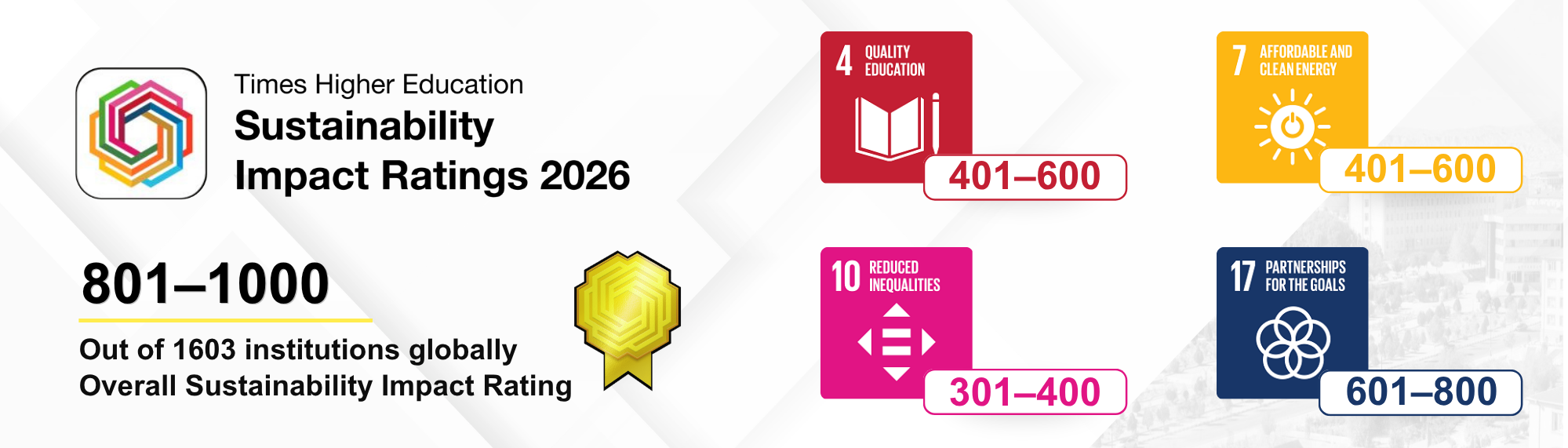
Rankings represent a specialized international ranking system that measures universities’ social, environmental, and economic impact based on their contributions to the 17 United Nations Sustainable Development Goals (SDGs). The primary aim of the Impact Rankings is to highlight not only academic excellence but also universities’ broader societal responsibility and commitment to sustainable development, including areas such as quality education, gender equality, clean energy, poverty reduction, and climate action.
The THE Impact Rankings are based on data submitted by participating universities. To be eligible, institutions must provide data for SDG 17—Partnerships for the Goals—and may additionally submit data for their three strongest SDG areas, allowing universities to emphasize their key strengths and areas of impact.
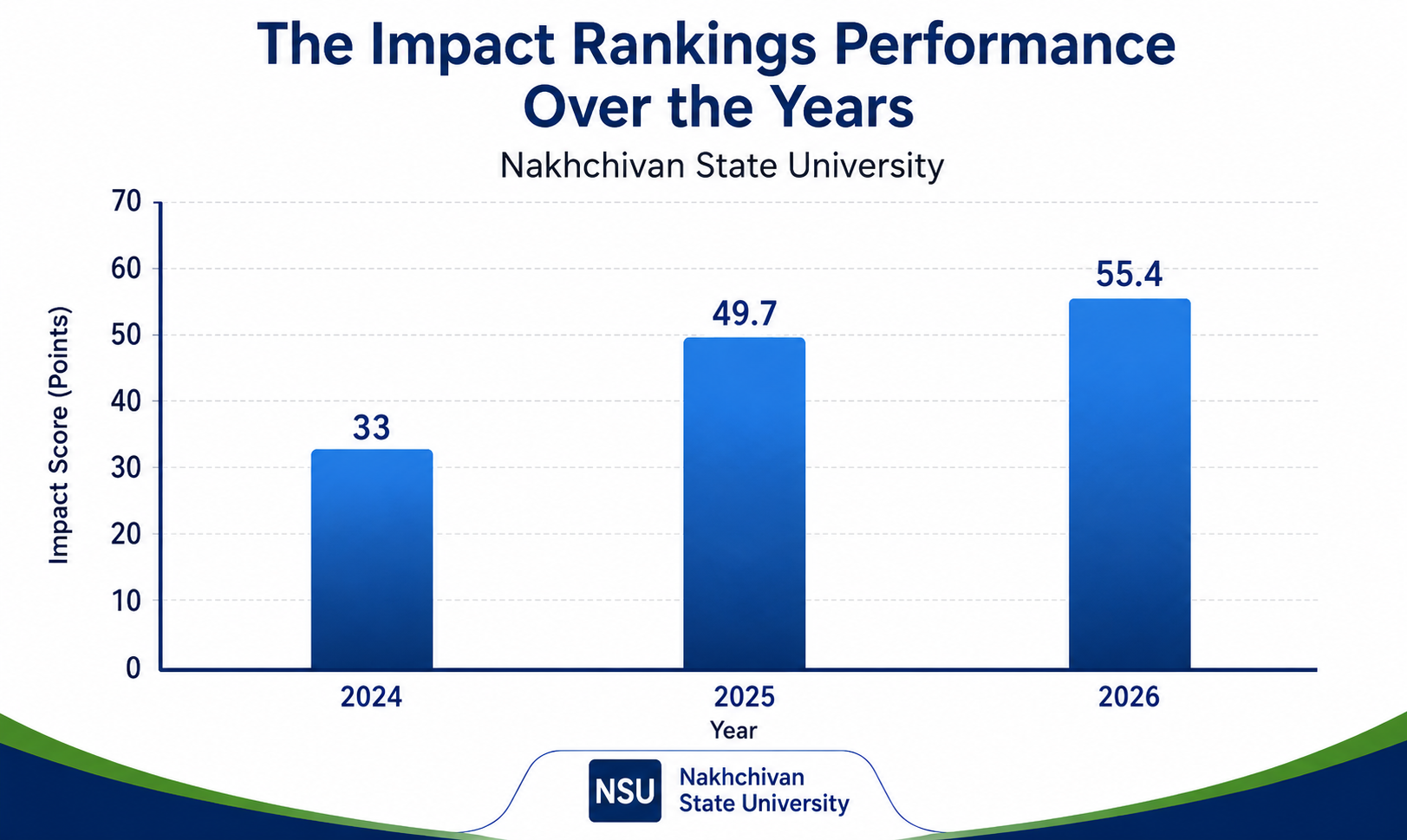
Nakhchivan State University (NSU) first participated in the THE Impact Rankings in 2023 and has demonstrated consistent progress over subsequent years:
The steady increase in scores over the three-year period reflects Nakhchivan State University’s continuous improvement in sustainability-focused initiatives, social responsibility, and alignment with the United Nations Sustainable Development Goals. The 49.06 points achieved in 2025 underline the University’s expanding engagement in sustainable development activities and its strong potential for further growth and global impact.
Overall, Nakhchivan State University’s participation in the Times Higher Education (THE) Rankings underscores its commitment to international academic standards and its strategic focus on quality education, research excellence, and meaningful societal contribution.
Nakhchivan State University
QS Stars Rating System
QS (Quacquarelli Symonds) is an international higher education organization founded in the United Kingdom in the 1990s. It is one of the world’s leading authorities in evaluating, ranking, and comparing universities globally. QS aims to assess universities’ academic performance, research activity, employability outcomes, and international reputation, while also providing guidance and information platforms for students and institutions worldwide.
One of QS’s most recognized products is the QS World University Rankings, which evaluate universities based on six core indicators: academic reputation, employer reputation, faculty-to-student ratio, citations per faculty, international faculty ratio, and international student ratio. Among these indicators, academic reputation and research-related metrics carry the highest weight, making QS rankings a key reference for measuring academic quality and global recognition.
In addition to global rankings, QS offers a range of specialized evaluation frameworks, including QS Asia University Rankings, QS Graduate Employability Rankings, QS Top 50 Under 50, and QS Subject Rankings, which assess universities by region, discipline, institutional age, and employability performance. These rankings help institutions better understand their academic strengths, labor market relevance, and international engagement.
The QS Stars Rating System is a comprehensive evaluation framework that differs from traditional league tables by assessing universities across multiple performance dimensions rather than assigning a single rank. Within the QS Stars system, Nakhchivan State University is evaluated in key areas such as
- Teaching and learning environment
- Research and scholarly output
- Internationalization
- Employability
- Governance and institutional development
- Social responsibility and inclusiveness
The QS Stars methodology is based on institutional data submissions, external data sources, and standardized assessment criteria, providing a detailed and balanced profile of a university’s strengths and areas for development.
UI GreenMetric World University Rankings
The UI GreenMetric World University Rankings is an international evaluation platform that assesses universities worldwide based on their commitment to environmental sustainability and sustainable campus management. Established in 2010 by the University of Indonesia, GreenMetric evaluates participating institutions annually, promoting global awareness of sustainability issues and encouraging environmentally responsible practices in higher education.
The ranking assesses universities across key indicators, including:
- Infrastructure and campus setting
- Energy efficiency and climate change initiatives
- Waste and water management
- Transportation policies
- Education and research related to sustainability
Each indicator is scored, and universities are ranked according to their total score, allowing for comparison both globally and regionally. The GreenMetric platform is open to universities worldwide, fostering international collaboration and promoting sustainability as a core principle of campus operations and academic activities.
Nakhchivan State University (NSU) participated in the GreenMetric World University Rankings for the first time in 2025, achieving a global ranking of 628th and ranking 6th among universities in Azerbaijan. This participation demonstrates the University’s commitment to environmental responsibility, sustainable development, and the integration of sustainability principles into education, research, and campus management.
Through engagement in GreenMetric and other international ranking systems, Nakhchivan State University aims to enhance transparency, strengthen institutional quality, and further integrate into the global higher education and research landscape.